
LINEAR POETRY,
Drawing as a conversational field between perception, presence, and the human figure.
“Sustained Encounter”
Gerrit Handl develops drawing through sustained encounters with the human figure. Working primarily from life across repeated sittings, the practice unfolds through attentive observation and prolonged engagement. Rather than pursuing a fixed image, each drawing remains open to discovery, allowing perception to evolve through duration, exchange, and continued return.
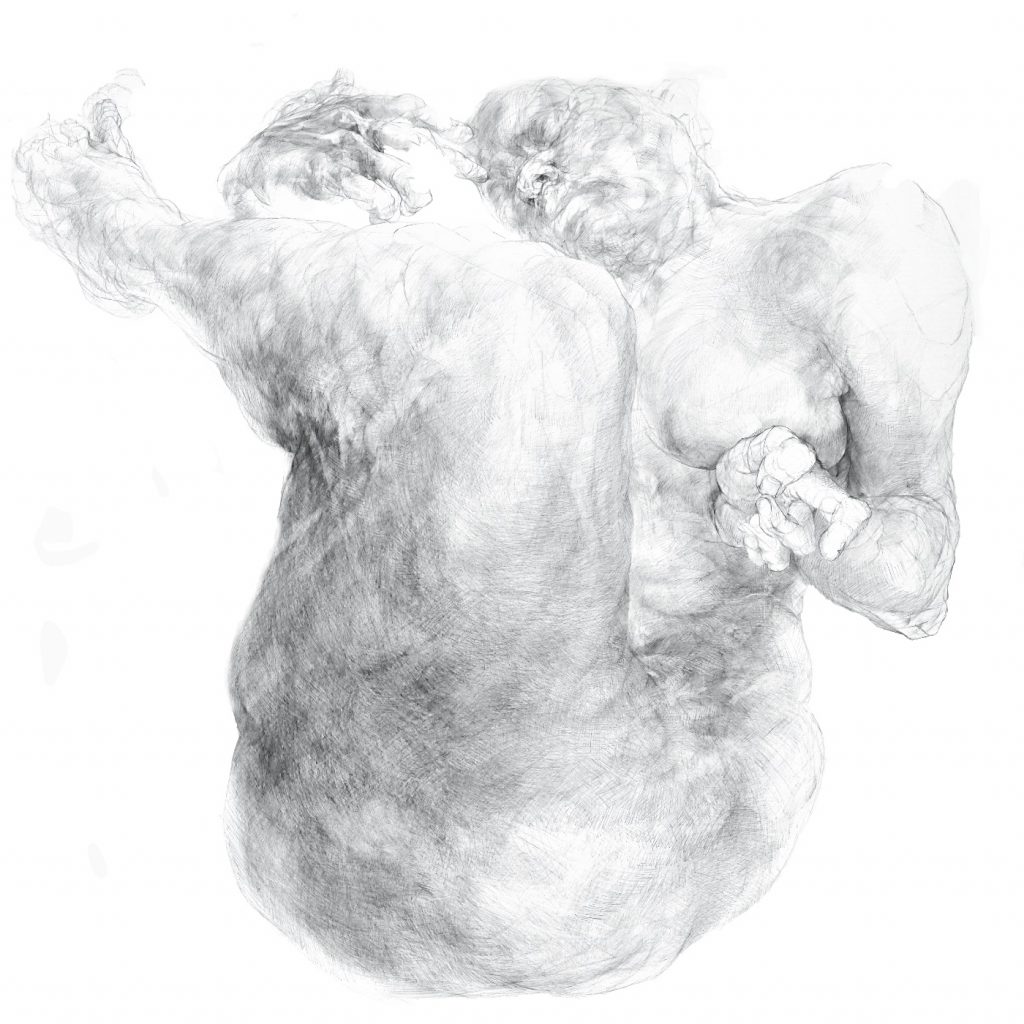
Life – and the emerging 3rd entity,
The figure serves as a point of departure for an ongoing process of observation, attention, and dialogue.
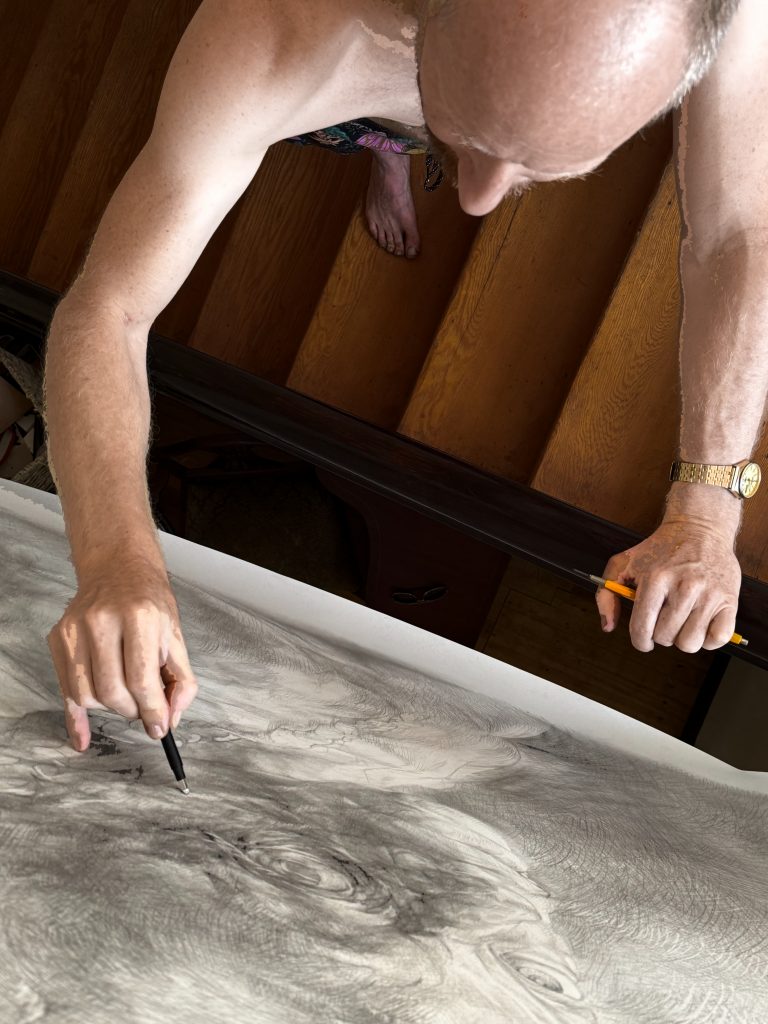
Line as Conversation – Through successive sittings, line accumulates as a spatial and temporal record in which observation, movement, memory, and perception continually inform one another. The drawings develop through interconnected meshworks of line that construct form through gradual emergence rather than direct representation. Drawing becomes a conversational process in which the figure is continually re-examined, revised, and rediscovered.
Meshwork Detail – Accumulated lines register duration, attention, and the evolving construction of form.
Figure and Abstraction – While the human figure remains visible throughout the work, it is held within a continuously evolving network of marks that resists fixed representation. The abstraction resides within the drawing language itself, maintaining an active tension between recognition and uncertainty. Form remains present, yet continuously open to transformation through line.
Emergent Figure – The figure appears through accumulation and relationship rather than through descriptive depiction alone.
Duration and Presence – Drawing is approached as a durational activity in which forms evolve across multiple sessions and encounters. Each return to the work introduces new relationships, adjustments, and discoveries. The drawings therefore function not as records of a single moment, but as evolving fields of perception shaped through sustained attention over time.
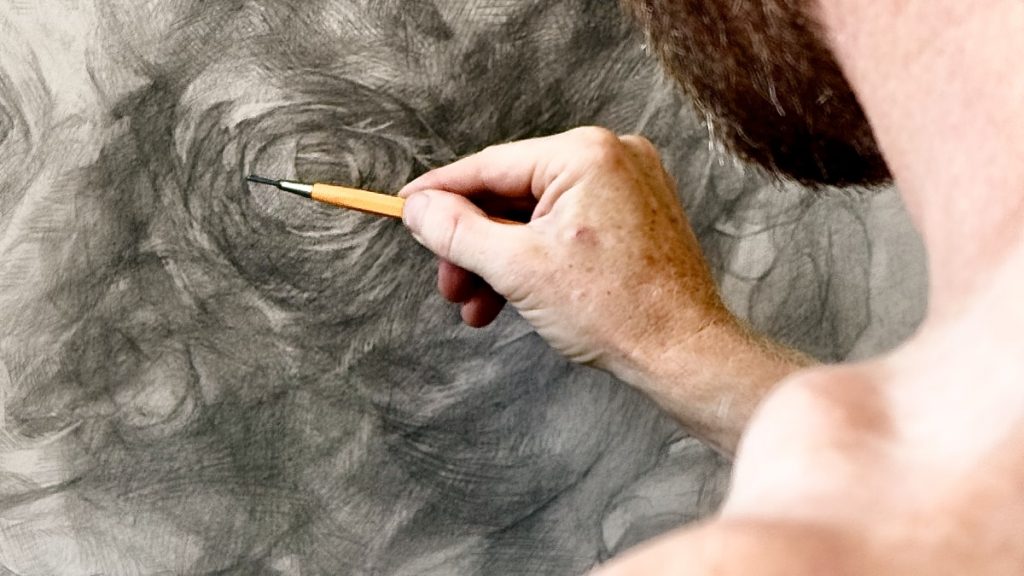
Work in Progress,
Repeated sittings allow the drawing to develop through observation, revision, and continued engagement.
“Under the framework of LINEAR POETRY,
drawing is understood as a conversational field through which relationships between perception, presence, and the human figure are continually negotiated.”
Each drawing emerges through an ongoing exchange between observer, subject, and line, where meaning is not imposed but discovered through duration, attention, and encounter.